Home
History
Culture Heroes Gallery Our Journey
Those Who Shaped the Nation

Heroes of
Ghana

Warriors, statesmen, scholars, artists, and dreamers — the men and women whose courage, vision, and sacrifice built the nation we know as Ghana.

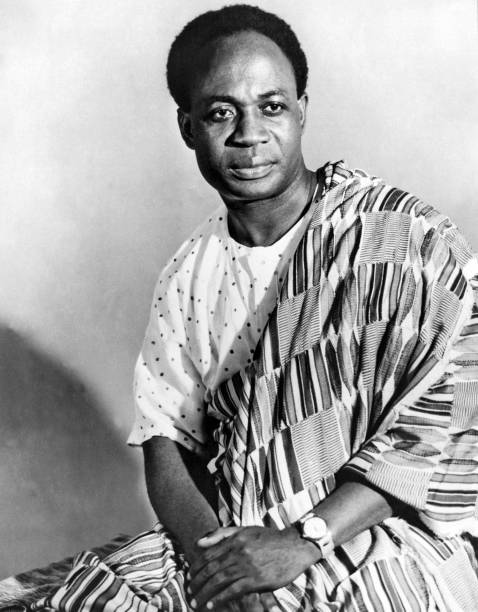
Kwame Nkrumah
1909 – 1972
First President of Ghana

Kwame Nkrumah

Father of the Nation · Pan-Africanist · First President

Born on 21 September 1909 in Nkroful, in what was then the Gold Coast, Kwame Nkrumah would become one of the 20th century's most consequential political figures. After completing primary education in Ghana, he won a scholarship to Lincoln University in Pennsylvania — a historically Black college that had educated Thurgood Marshall and Langston Hughes — where his political consciousness was forged in the crucible of American racism, Marcus Garvey's pan-Africanism, and socialist thought.

Nkrumah moved to London in 1945, where he immersed himself in the transnational Black intellectual world of the post-war period — co-organising the historic Fifth Pan-African Congress in Manchester alongside W.E.B. Du Bois, George Padmore, and Jomo Kenyatta. He returned to the Gold Coast in 1947 as a man transformed.

"We face neither East nor West. We face forward." — Kwame Nkrumah, Accra, 1960

His strategy was mass mobilisation — bringing ordinary Ghanaians into politics for the first time. Market women, farmers, lorry drivers, dockworkers, and students became the backbone of the Convention People's Party. When the British imprisoned him in 1950, he ran his campaign from jail — and won. They had no choice but to release him and invite him to govern.

As Prime Minister and then President, Nkrumah pursued an ambitious programme: the Akosombo Dam for hydroelectric power, Tema Harbour, a network of roads, hospitals, and schools, and the establishment of the University of Science and Technology. He founded the Organisation of African Unity in 1963 and positioned Ghana as a beacon of pan-African solidarity.

His legacy is complex — increasing authoritarianism, the jailing of political opponents, and economic mismanagement contributed to the 1966 coup that ended his rule while he was in Hanoi. But his foundational achievement — the peaceful, legal dismantling of British colonial rule — remains one of the defining moments of modern African history.
IndependencePan-AfricanismSocialism InfrastructureOAU Founder
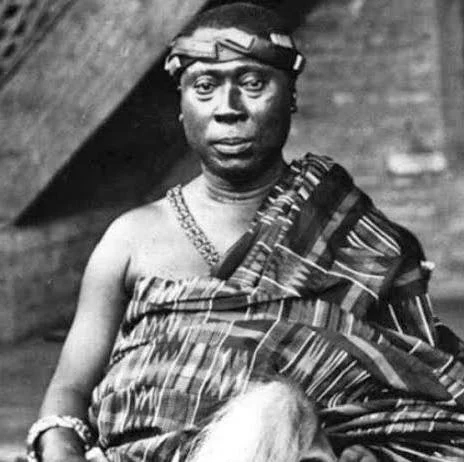
Yaa Asantewaa memorial
c. 1840 – 1921
Queen Mother of Ejisu

Yaa Asantewaa

Warrior Queen · Symbol of African Women's Resistance

In March 1900, British Governor Frederick Hodgson made one of colonial history's most tone-deaf demands: he summoned Asante chiefs and told them he wished to sit upon the Golden Stool — the sacred object that embodied the soul of the Asante nation. The male chiefs, their king already in exile in the Seychelles, debated and hesitated.

Yaa Asantewaa, Queen Mother of Ejisu, did not hesitate. According to tradition, she rose before the assembled chiefs and delivered one of African history's great speeches: "If you, the chiefs of Asante, are going to behave like cowards and not fight, you should exchange your loin cloth for my undergarments."

"Is it true that the bravery of the Asante is no more? I must say this — if you the men of Asante will not go forward, then we will. I shall call upon my fellow women. We will fight the white men. We will fight till the last of us falls in the battlefields."

Yaa Asantewaa was appointed Commander-in-Chief of the Asante forces. For several months in 1900, her forces besieged the British garrison in Kumasi — at one point trapping the Governor himself. The British eventually brought in thousands of additional troops from across West Africa to relieve the siege, and Yaa Asantewaa was captured and exiled to the Seychelles, where she died in 1921.

She never surrendered the Golden Stool. The stool was secretly hidden by the Asante and never found by the British — a triumph that outlasted the war. Yaa Asantewaa's resistance is recognised as the last major armed resistance against British rule in Africa led by a woman, and her legacy is celebrated annually at the Yaa Asantewaa Festival in Ejisu.

Military ResistanceAsanteWomen's Leadership Anti-ColonialGolden Stool
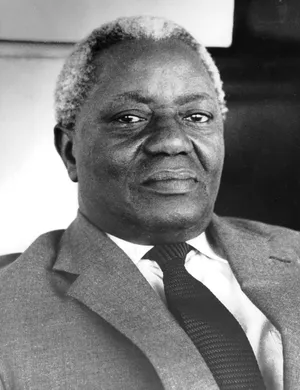
J.B. Danquah memorial
1895 – 1965
Scholar, Lawyer & Nationalist

Joseph Boakye Danquah

The Doyen of Ghanaian Politics · Named the Nation

J.B. Danquah is one of the most towering intellectual figures in Ghanaian history — a man who named the country, co-founded its first national political party, and died in prison for his principles. Born in 1895 in Bepong in the Ashanti Region, he studied law in London and earned a doctorate in philosophy — the first Ghanaian to do so.

Danquah was instrumental in arguing that the new independent nation should be named "Ghana" — drawing the spiritual and historical connection to the ancient Ghana Empire and reclaiming an African name for an African nation, rather than simply dropping the colonial Gold Coast designation. This act of naming was itself a profound political statement.

He co-founded the United Gold Coast Convention (UGCC) in 1947 — the first modern nationalist political party — and it was Danquah who personally invited Nkrumah to return from London to serve as the party's General Secretary. When Nkrumah broke away to form the more radical CPP, the two became rivals — but both were essential to the independence movement.

"Let us prove to the world that when Africans get their chance, they can build a society worthy of the name." — J.B. Danquah

After independence, Danquah became the leading opposition voice against Nkrumah's increasingly authoritarian tendencies. He ran against Nkrumah for the presidency in 1960. Under the Preventive Detention Act, he was imprisoned twice without trial. He died in Nsawam Prison on 4 February 1965 — denied medical treatment, at the age of 69. Ghana's international airport is named in his honour.

Named GhanaLegal ScholarUGCC Founder Political PrisonerDemocracy
More Heroes

A Nation of Giants

Ghana's story is carried by countless remarkable people — in diplomacy, art, sport, and science.

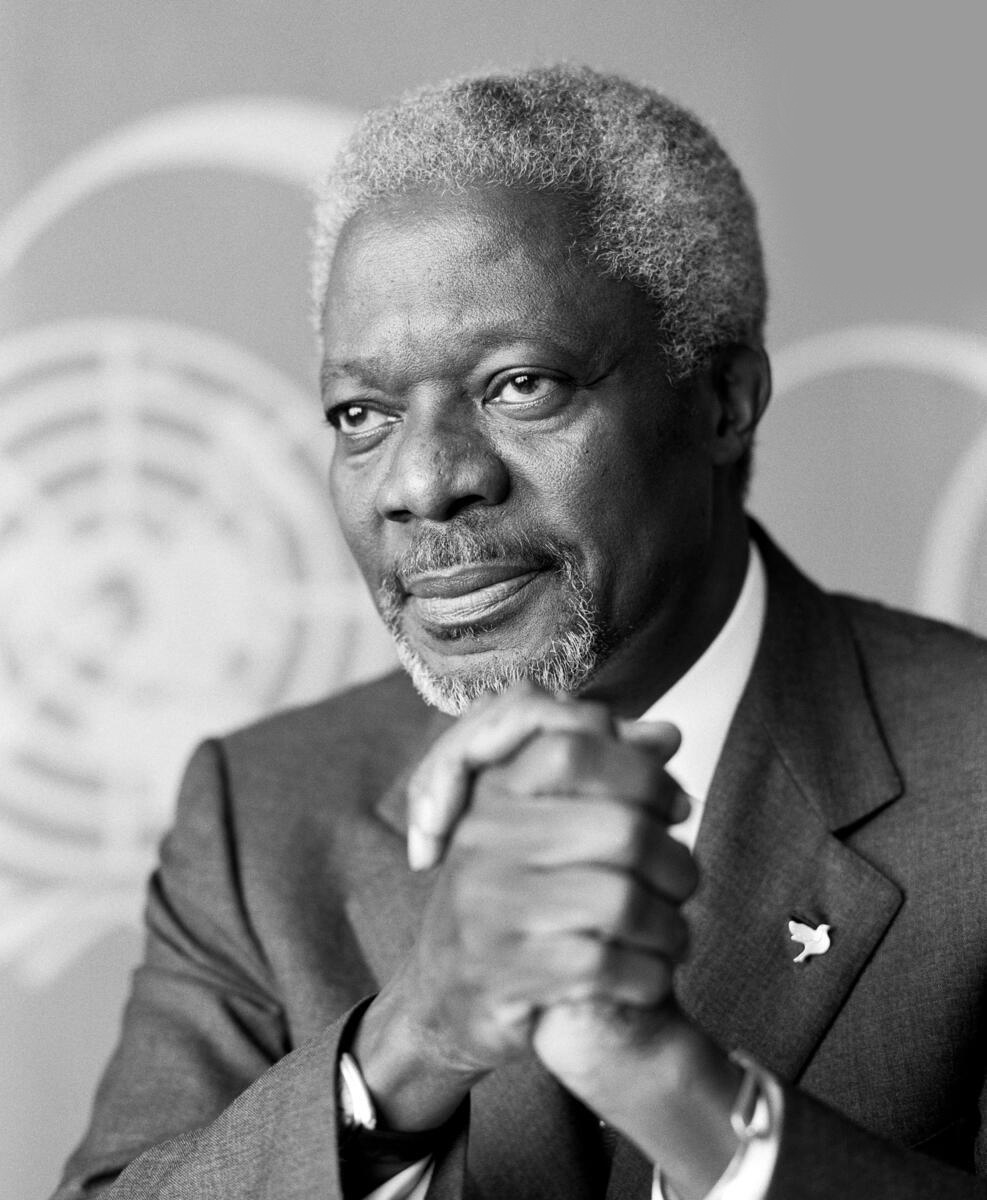
Kofi Annan

Kofi Annan

UN Secretary-General (1997–2006)

Nobel Peace Prize laureate who reformed the United Nations, championed the Millennium Development Goals, and elevated Ghana's global standing through decades of diplomatic brilliance.

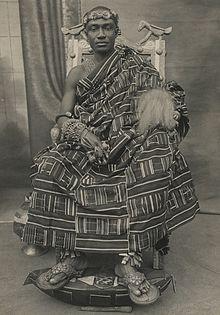
Osei Tutu I

Osei Tutu I

Founder of the Asante Confederacy

The warrior-king who unified the Akan clans under the Golden Stool in 1701 and created one of Africa's most powerful pre-colonial empires, whose institutions persist to this day.

Abedi Pele Ayew

Abedi Pele Ayew

Football Legend

Three-time African Footballer of the Year and one of the greatest players of his generation. His legacy lives on through sons André and Jordan, who have represented Ghana at the highest levels.

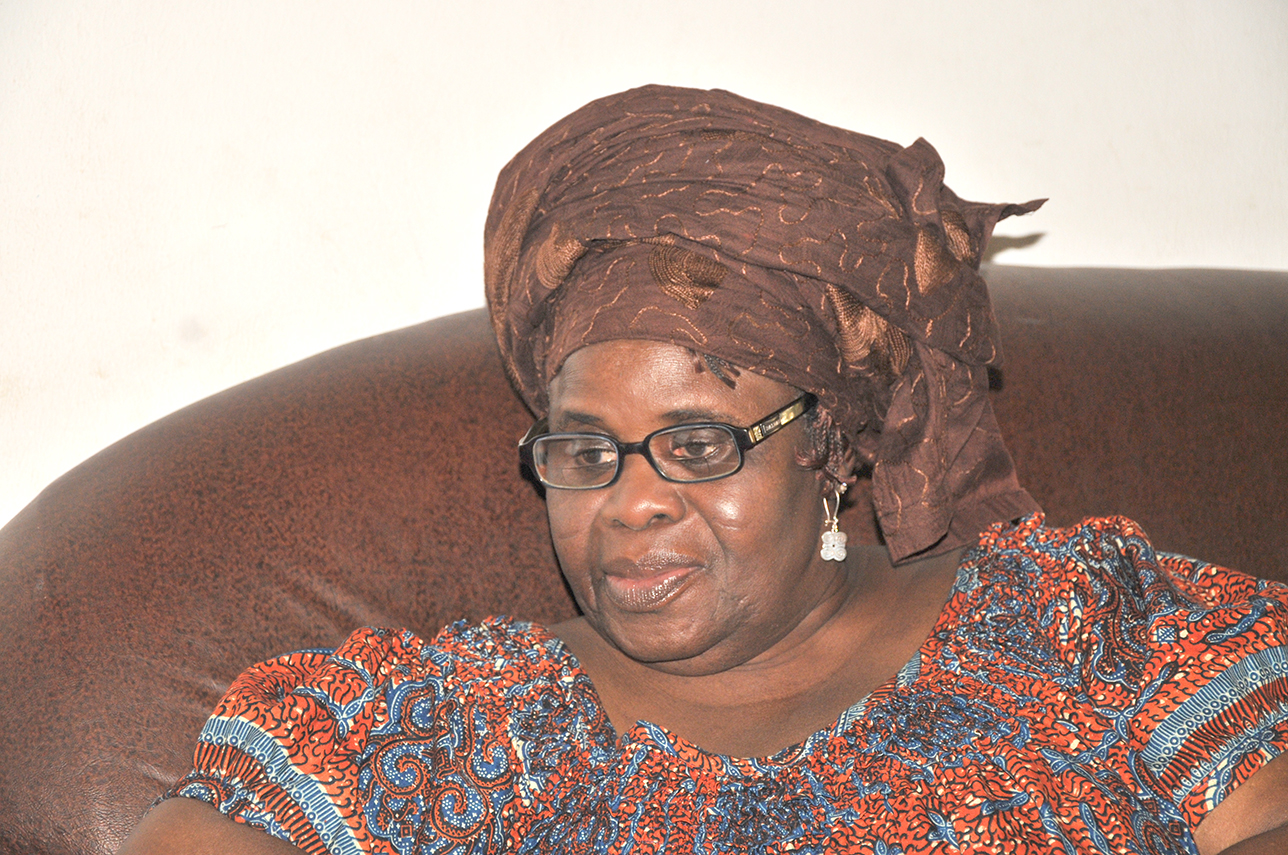
Ama Ata Aidoo

Ama Ata Aidoo

Writer & Playwright

One of Africa's foremost literary voices — playwright, novelist, and poet whose works explore colonialism, gender, and African identity. Her play "Dilemma of a Ghost" (1964) was a landmark in African literature.