The Ancient Ghana Empire
Though geographically located in what is today Mali and Mauritania, the ancient Ghana Empire — known to its people as Wagadou — gave the modern nation its name and its spiritual heritage. It was West Africa's first great empire, built on the crossroads of the trans-Saharan trade.
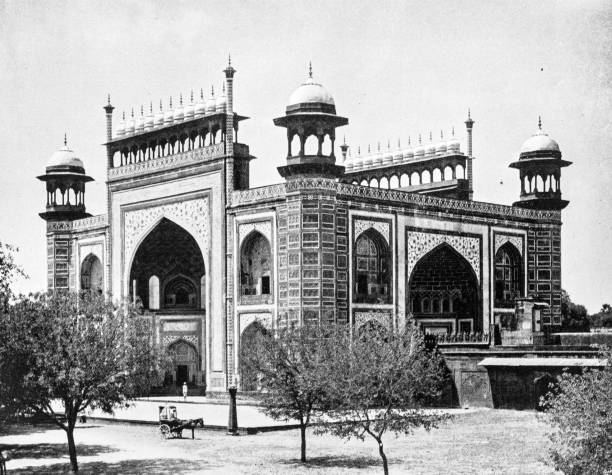
Wagadou: The Land of Gold
The Ghana Empire — formally called Wagadou — arose around the 4th century AD from the Soninke people. Positioned at the intersection of gold-bearing forests to the south and salt mines of the Sahara to the north, Wagadou became extraordinarily wealthy by controlling and taxing the flow of these essential commodities.
The empire's capital, Koumbi Saleh, was one of the largest cities of the medieval world, reportedly home to 20,000 people at its height. Its king commanded an army of 200,000 men and maintained courts of dazzling opulence that astonished Arab travellers like Al-Bakri, who documented its splendour in 1068.
Read More ↗The Akan Kingdoms
Long before the Asante Confederacy, the Akan-speaking peoples of the forest zone established a network of sophisticated, independent kingdoms — each with its own traditions, armies, and gold-trading networks that would shape the identity of modern Ghana.
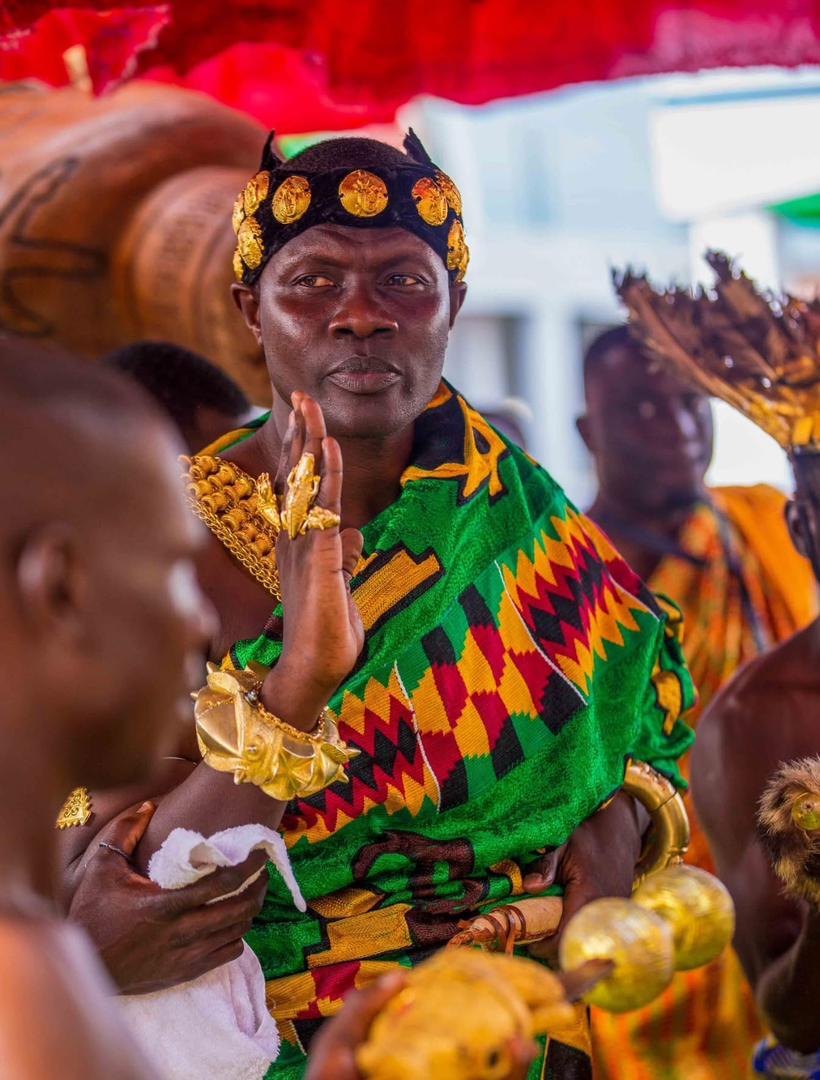
Kingdom of Bono (c. 1400s)
The Bono (or Brong) state was among the earliest Akan kingdoms, centred around modern Techiman. It became a major gold-trading hub and is considered the ancestral state from which many later Akan peoples migrated.
The Denkyira Kingdom
By the 17th century, Denkyira had become the dominant Akan power — controlling access to European trade at the coast and extracting tribute from dozens of smaller states, including the early Asante clans. Its fall to Asante in 1701 transformed the region.
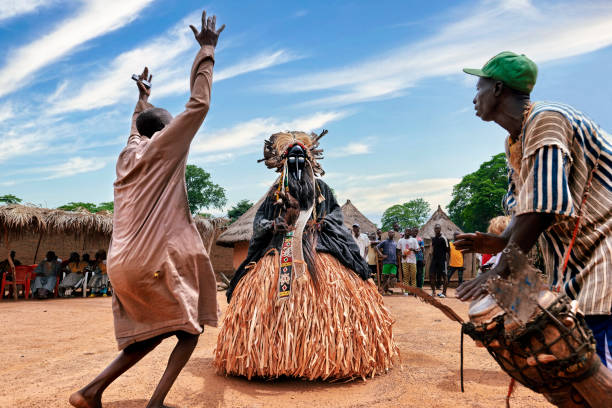
Governance & Spirituality
Akan kingdoms were organised around the matrilineal clan system — inheritance and identity passed through the mother's line. The role of the Ohemaa (Queen Mother) as kingmaker and advisor was constitutionally central to governance.
The Asante Empire
The Asante Confederacy was the most powerful and sophisticated African empire south of the Sahara in the 18th and 19th centuries — a state that fought European colonisers to a standstill for nearly a century.
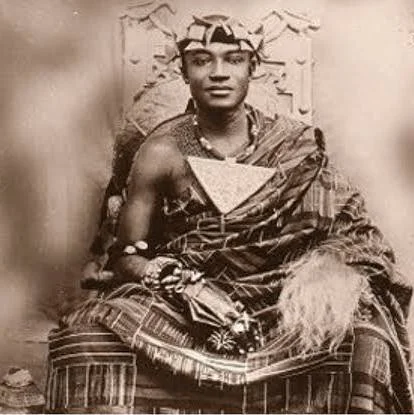
Osei Tutu & the Birth of Asante
In 1701, the warrior-king Osei Tutu I, aided by his spiritual advisor Okomfo Anokye, unified the scattered Akan clans of the Kumasi plateau into a single, powerful confederation. The instrument of unity was the Sika Dwa Kofi — the Golden Stool — said to have descended from heaven into Osei Tutu's lap, embodying the collective soul of the Asante people.
Under Osei Tutu and his successors, Asante rapidly expanded through military conquest, diplomatic marriages, and commercial dominance. By the mid-18th century, Asante controlled much of modern Ghana, with tributaries stretching from the coast to the northern savannah. Kumasi, the capital, was a city of 25,000 — a centre of architecture, craft, law, and statecraft that astonished visiting Europeans.
Read More ↗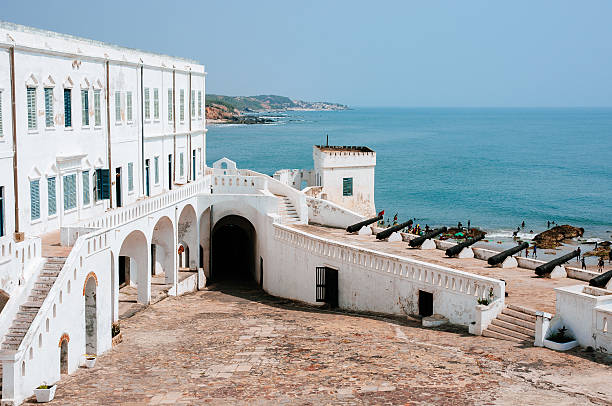
The Anglo-Asante Wars (1823–1900)
As Britain extended its influence along the Gold Coast, it inevitably clashed with the Asante. Between 1823 and 1900, a series of five major wars were fought — and for much of that period, Asante held its own or prevailed outright. The 1824 Battle of Nsamankow saw British commander Sir Charles MacCarthy killed in the field by Asante forces.
The Third Anglo-Asante War (1873–74) resulted in the burning of Kumasi — but even this did not end Asante sovereignty. The Confederacy rapidly rebuilt and continued to resist British encroachment.
The defining moment came with the War of the Golden Stool in 1900 — sparked when British Governor Frederick Hodgson demanded the Asantehene surrender the Golden Stool for him to sit upon. This extraordinary cultural insult united the Asante in outrage. Yaa Asantewaa, Queen Mother of Ejisu, led the military resistance in the absence of exiled male chiefs.
The Colonial Era
For nearly five centuries, the Gold Coast was the site of European ambition, human tragedy, and remarkable African resistance. From the Portuguese arrival in 1471 to the transfer of power in 1957, this era irrevocably shaped Ghana's present.
The Door of No Return
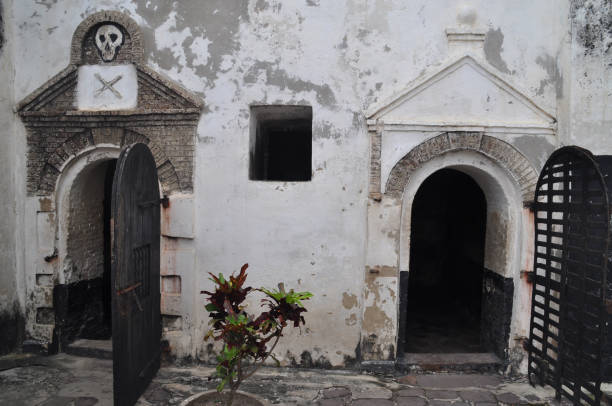
Portuguese explorer Diogo de Azambuja arrived at the Gold Coast in 1471, and by 1482 had built Elmina Castle — the first permanent European structure in sub-Saharan Africa. Initially a trading post for gold, it became — as European demand shifted — a processing centre for enslaved human beings.
Over the following three centuries, an estimated 12 million people were transported across the Atlantic from West Africa. The Gold Coast was among the major source regions. Elmina, Cape Coast Castle, and dozens of smaller forts formed a chain of horror along the coastline — warehouses for human beings awaiting the Middle Passage.
Read More ↗British Rule & the Gold Coast Colony
By 1874, Britain formally declared the coastal Gold Coast a Crown Colony. Following the Asante Wars, the full territory was consolidated under British administration by 1902. Colonial rule brought roads, railways, and schools — but on terms entirely designed to serve British commercial interests, particularly cocoa and gold extraction.
The colonial administration was paternalistic and racially hierarchical — a handful of educated Ghanaians could rise to junior administrative positions, but real power lay with the Governor in Accra. This contradiction — educating Africans in Western democratic values while denying those values in practice — would eventually produce the generation that dismantled the system.
The Road to Independence
The decade from 1947 to 1957 was one of the most consequential in African history — a period of mass mobilisation, strategic brilliance, and unstoppable popular will that ended colonial rule in the Gold Coast forever.
Nkrumah & the CPP
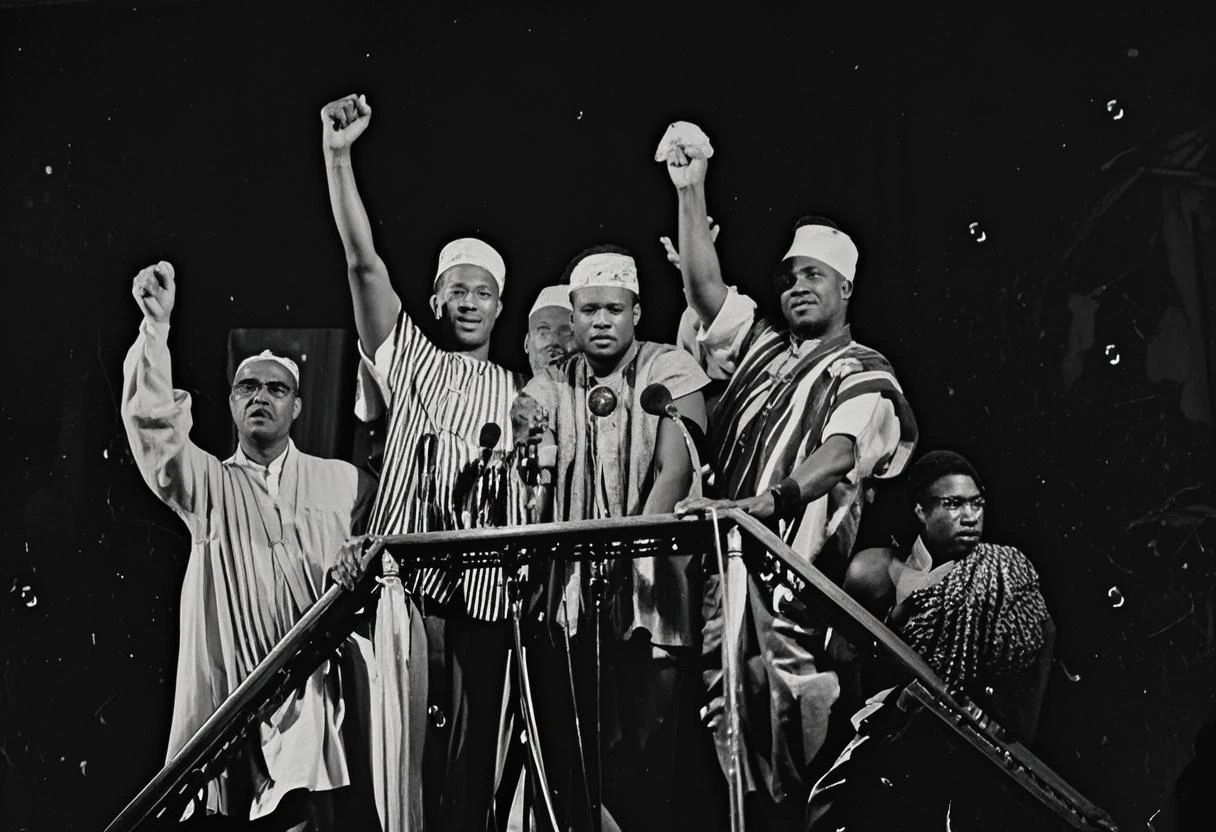
When Kwame Nkrumah returned from 12 years of study in the United States and United Kingdom in 1947, he was a transformed figure — immersed in Marcus Garvey's pan-Africanism, C.L.R. James's socialism, and the American civil rights tradition. He joined the United Gold Coast Convention (UGCC) but quickly found its elite, conservative leadership too timid for the moment.
In 1949, Nkrumah founded the Convention People's Party (CPP) with the electrifying slogan "Self-Government Now." The party mobilised workers, market women, veterans, students, and rural farmers into a mass movement of unprecedented scale. "Positive Action" — strikes, civil disobedience, boycotts — became the strategy.
Read More ↗"We have awakened. We will not sleep anymore. Today, from now on, there is a new African in the world!"
— Kwame Nkrumah, Independence Declaration, 6 March 1957